Summer Safety: Pool, Sun & Bug Protection
Dr. John M. Young, MD · January 10, 2026 · 3 min read
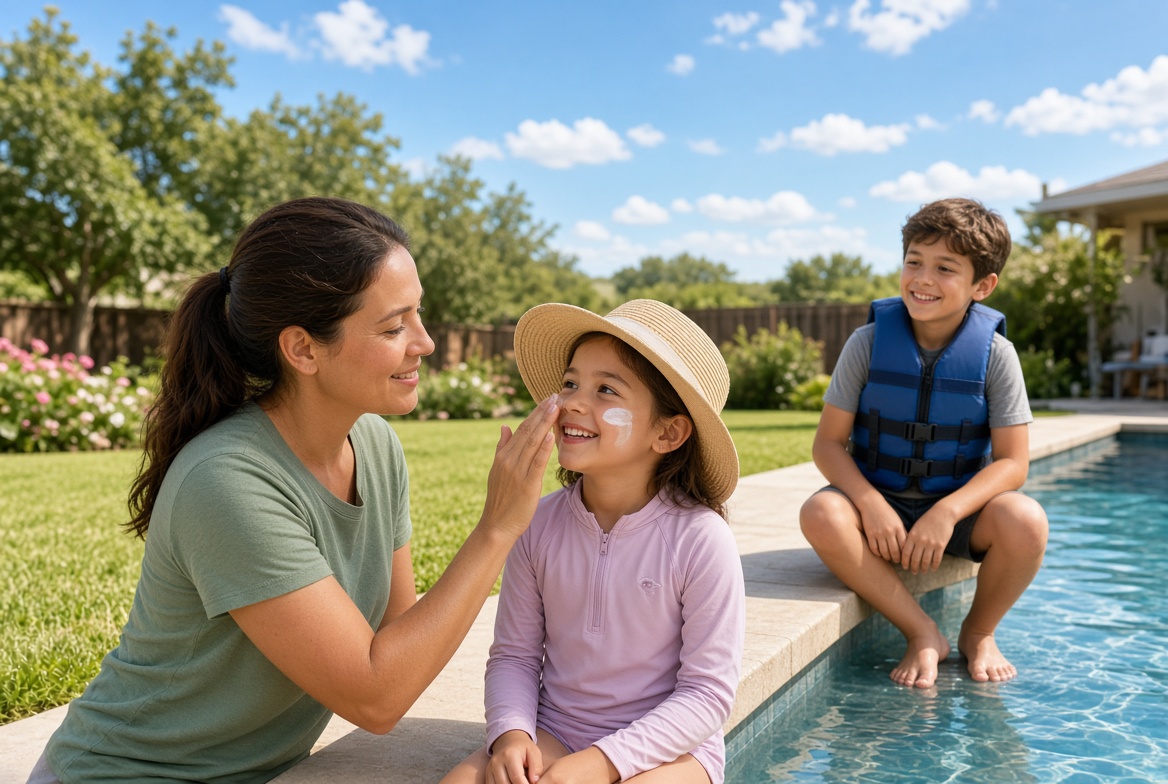
Sun Protection
Infants under 6 months: Keep them in the shade as much as possible. Use lightweight clothing, a wide-brimmed hat, and a stroller canopy. Sunscreen is generally avoided at this age; if shade and clothing aren’t enough, a small amount of mineral (zinc oxide or titanium dioxide) sunscreen on exposed areas is acceptable.
Older infants and children: Use a broad-spectrum sunscreen with SPF 30 or higher. Apply it 15–30 minutes before going outside and reapply every 2 hours, or right after swimming or sweating. Don’t forget ears, neck, tops of feet, and the back of the knees.
Clothing helps: Look for UPF-rated swim shirts, rash guards, and hats. They reduce the amount of sunscreen you need and offer reliable protection.
Pool & Water Safety
Drowning is silent and can happen quickly, even in shallow water.
Active supervision: Designate a “water watcher” who isn’t distracted by phones or other tasks. Stay within arm’s reach of younger children.
Barriers and rules: Four-sided fencing with a self-latching gate around home pools is the strongest protection. Teach kids not to enter the pool area without an adult.
Swim lessons: Start age-appropriate lessons when your child is ready; they help but do not replace supervision.
Life jackets: Use Coast Guard-approved life jackets for any open water or when a child is not a strong swimmer. Arm floaties and water wings are not substitutes.
Drain covers and alarms: Make sure pool drains have proper covers and consider a pool alarm or door alarm as extra layers of safety.
Bug Protection
Mosquitoes and other biting insects are common in warm weather.
Repellents: For children 2 months and older, products containing DEET (up to 30%), picaridin, or IR3535 are effective and safe when used as directed. Oil of lemon eucalyptus is an option for children 3 years and older.
Application tips: Apply to clothing and exposed skin; avoid hands, eyes, and mouth. Do not apply under clothing. Wash off when you come indoors.
Clothing and environment: Long sleeves and pants in light colors help. Eliminate standing water around the home where mosquitoes breed.
Ticks: After outdoor time in grassy or wooded areas, do a full-body check (including the scalp and behind the ears).
Extra Texas Summer Tips
Hydration: Offer water frequently. Kids don’t always recognize thirst, especially when they’re busy playing.
Heat: Limit intense outdoor activity during the hottest part of the day. Watch for signs of heat exhaustion (heavy sweating, dizziness, nausea, fatigue) and move to shade or air-conditioning right away.
Cars: Never leave a child in a vehicle, even for a minute. Temperatures rise quickly.
If your child has a sunburn that blisters, a rash after insect bites, or any signs of heat illness that don’t improve quickly, give us a call. Enjoy the season—with a few consistent safety steps, summer can be fun and low-stress for the whole family.